Showing posts with label tips n tricks. Show all posts

Wednesday, August 21, 2013

What I've Learned (so far!) About Canning

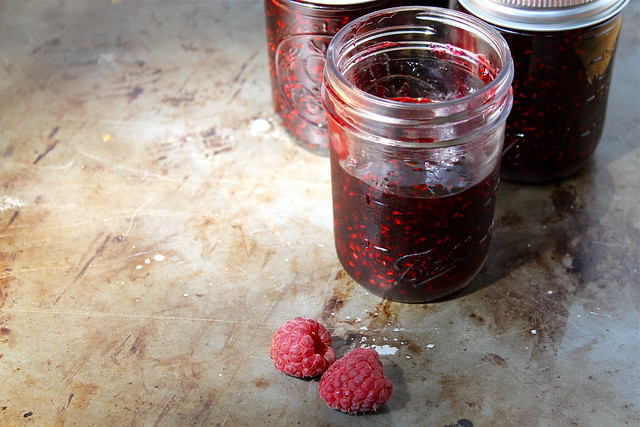
Red & Black Raspberry Jam


I hope canning week is as fun for you all as it has been for me! It's been a challenge - a good one - to get one or two posts up per day, rather than the same number per week. It was a lot easier to post more often when I wasn't working full time! I've been canning for a couple summers now, and this week of writing about it has forced me to think about what I've learned in that time. I don't consider myself a pro by any stretch of the imagination, but I've gathered together some of what I've learned about jamming and canning. In no particular order:
  • You don't have to can. You can make a small batch, and if you'll eat it relatively quickly, you can just store it in the fridge. You can also simply freeze jam (be sure to use freezer safe containers and leave enough room for the expansion that happens during freezing).
  • Cleanliness counts. I am adamant about thoroughly cleaning my jars, lids, bands, pots, spoons, and canning tools every time. Even though they are clean when I pull them out of the drawer, I rewash thermometers, spoons, etc before I use them. It may be overkill, but it helps keep my mind at ease that I am doing everything I possibly can to make my preserves safe.

Tuesday, August 20, 2013

How to Have Your Best Farmers' Market Visit

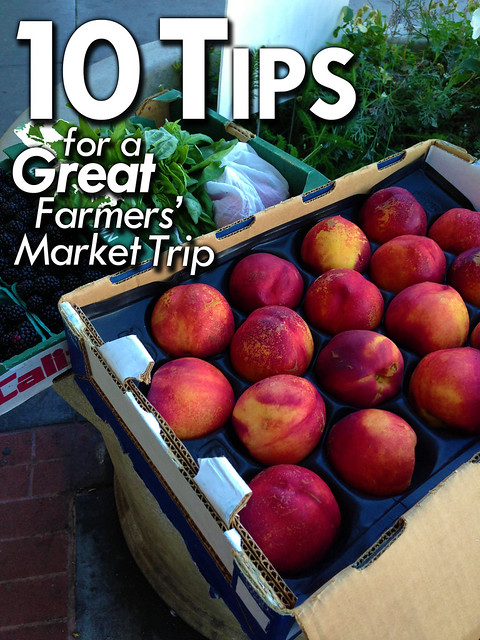
10 tips for a Great Farmers' Market Visit


As longtime readers know, I really, really like farmers' markets. For me, it's the total package. I love being outside, surrounded by food and people who love food. I love supporting my local economy and knowing that I'm helping support small farmers and small business. I love smelling tomatoes picked that morning. I love the anticipation of visiting my favorite peach stall and tasting the current offerings. I love coming home with something new. 

So in the spirit of spreading the love, here are my tips for you to have your best farmers' market visit:
  1. Decide on your goals. Do you want to buy the best looking produce and have the most selection, or do you want to go for larger quantities at a discount? Think about what you want to make ahead of time so you have a few ideas to work from. On the flip side, be prepared to be inspired or to learn something new.
  2. If you want the best quality and the most selection, go as close to the opening of the market as you can. Vendors will have the best selection early, before they start to sell out.
  3. If you want to get large quantities of produce for preserving (jams, pesto, tomato sauce, etc), then go towards the end of the market. You may not be able to buy exactly what you want (farmers may have sold out of blackberries, for example), so be prepared to be flexible and have several ideas in mind. Typically, near the end of the day, farmers will want to get rid of their perishables, so you should be able to pay somewhat less money per pound/flat/bunchPro tip: for your sanity, don't buy more to preserve than you can reasonably accomplish. For example, last week I bought basil for pesto, berries, and peaches. I did not buy tomatoes to make sauce or paste with. Just some for eating. Maybe next week I'll tackle tomatoes. Know your limits!

Wednesday, April 3, 2013

Eating Well Without Spending a Fortune


A friend of mine is on a mission to get her financial house in order. I am totally on board with this plan, and I think that while it's somewhat painful in terms of cutting back now, it's the right move for her future. It got me to thinking about food budgeting and how to eat well without spending a ton of money, so I figured I'd share my ideas here and then you can chime in with yours. mmmkay?


Eat Seasonally
I've talked about eating seasonally before in terms of eating the best tasting fruits and vegetables, but it's also usually the most economical way to eat as well. Happy coincidence, no? When you stop and think, it makes perfect sense that in January, a 6 ounce clamshell of raspberries can cost $5, while in the height of summer it's often more like $2. In January, raspberries are shipped halfway around the world before appearing on the shelves, but in August, not only are they coming from the next town or county over, but the plants are producing gazillions of fragile, perishable fruit that the farmers need to sell, like, now. Have a summer fruit craving in February that you just can't ignore? Visit your grocer's freezer section, and use frozen berries, mangoes, or pineapple to make a smoothie. Frozen fruit is reliably affordable.

Friday, November 2, 2012

How I Bake

I've been thinking about this post for a long time. Well, a few months at least. Mainly because it occurred to me that the way I bake and write about baking is different from everyone else out there in the food blogosphere. It's not different better or different worse, just different because every baker is unique in their own small ways. And that's awesome, because new perspectives are how recipes morph and improve. For instance, I adapted my oreo recipe from Sassy Radish, who adapted hers from Smitten Kitchen, who got it from Retro Desserts. And now it's waiting for you to adapt.

So whether you're new here (welcome!) or one of my very first readers (thank you!), here are a few details about how I bake which may help as you navigate cookies or cakes or bread or pies.

Wednesday, October 17, 2012

DIY Homemade Sugar Cubes

Molded Sugar hearts & flowers


It's the middle of our second Indian Summer of the month, and as much as I would like to be sharing a new bread recipe, I just couldn't bring myself to turn on the oven to try it again with another tweak or two. There have been two attempts thus far- one was pretty much a fail, and the second loaf tasted good but was rather more...dense...that I was aiming for.

However, I've had homemade sugar cubes in the back of my mind for a very long while, and it seemed like a good time to get them out in the real world.

Tuesday, March 6, 2012

How to Caramelize Onions


Caramelizing onions was, until recently, one of those things that I just didn't do, mainly because it seemed fancy and hard. But since I've tried it, I'm hooked! They taste fancy but are super simple to make. Time consuming, but simple. I recommend making a big batch at once, since it takes the same amount of time and energy to caramelize one onion as four, and because they can be stored in the refrigerator or even frozen (and, according to a commenter, you can actually make them in a slow cooker) so you can add them at will to fancy up any Plain Jane meal.


First, peel your onions and cut them in half from root to stem. I used organic yellow onions, but white should work as well. (I'm not sure about red onions- anyone?) Cut off the root and stem ends, and then slice each half lengthwise so that you have lots of strips. Add a few tablespoons of olive oil (enough to generously coat however many onions you are cooking) to a large skillet and heat on medium until the oil is shimmering. Turn the heat to medium-low, add the onions, sprinkle with salt, and stir to coat.


Stir frequently. You will probably need to to lower your heat further. You don't want to brown your onions like you might if you were sauteing them. You want them to become translucent, as in risotto. The first step in this process is when the onions start sweating. That's a good thing- you're trying to get moisture out so that the natural sugars can caramelize. Stir frequently and adjust your heat as needed. You want to strike the balance of high enough so that you don't spend the entire day stirring onions and low enough so you don't brown said onions.


Slowly, slowly, your onions will begin to shrink (from moisture loss) and go from translucent to slightly golden. This is good. Keep stirring.


Keep stirring frequently. The onions will develop beautiful caramel colors and scents. If all of your oil dries up and the onions aren't done yet, you can add a little more oil, water, wine, or stock.


That's it! The whole thing take 45-60 minutes, but you end up with deliciousness. I've been adding them from everything to pizza to sweet potatoes lately.

The Important Stuff:
1. Low heat
2. Stir frequently
3. Patience

Does that make sense? Questions? Or, if you're already a pro, what tips can you add?

Monday, November 21, 2011

How to Cook a Pumpkin


Last week, I wanted to make a pumpkin pie as a rehearsal for Thanksgiving, and this year I wanted to make it from a real pumpkin, not a can. I had a sugar pie pumpkin to use (I've seen them both at Trader Joe's and farmers' markets, fyi), but I've never actually cooked a pumpkin before. So I did a little internet research and combined a few techniques I read about to bake my own little pumpkin.


Here's what I did, but there's definitely lots of other methods out there, including microwaving if you need to save some time.

How to Bake a Pumpkin

1. Preheat your oven to 350F.
2. Without trying to cut through the stem, cut the pumpkin in half. Use an ice cream scooper to scoop out the seeds. Save them for roasting!
3. Place the pumpkin halves face down in an oven-proof dish. Add enough water so that there's about half an inch covering the bottom of the pan. Cover pumpkin with foil.
4. Cook the pumpkin for about 90 minutes, or until tender.
5. Remove from oven and allow to cool.

To puree for use in baking, scoop out cooked flesh and blend in a food processor or blender. Alternatively, smash with a potato masher. If you're not using the pumpkin right away, refrigerate or freeze.

Wednesday, October 12, 2011

How to Peel a Head of Garlic in Under 10 Seconds


I could hardly believe it when I saw that headline either. But over at Saveur, Executive Food Editor Todd Coleman does magic. This may not be super useful for peeling one or two cloves for your evening pasta-for-two, but for making big batches of things? yes, please!

Wednesday, September 28, 2011

How to roast fresh beets


One of the fun things at farmers' markets around Seattle that I don't remember from San Diego is fresh beets. San Diego friends, help me out. Did I just miss them?

Anyway, we've gotten them a few times this summer, and each time we get them I have to look up how to cook them. So I figure if I write it down, I'll remember it (just like moms and teachers always say). 

First, cut off the leaves (you can eat them if you'd like) and give the beets a good scrubbing. Then, using either a single piece of foil that you then fold into a large packet or individual pieces, drizzle each beat in olive oil. Wrap with foil and seal the seams.


Bake at 375F for 45-50 minutes, or until the beets give a little when you squeeze them gently with tongs. If you already have the oven on for another project, stick the beets in with them and alter the time accordingly. For instance, I had mine in at the same time as these brownies and just baked them longer (more like 60-70 minutes)


Unwrap the beets and allow them to cool. At this point, the peels will come off pretty easily; you might not even need a knife except to get the tip off. If you're really on top of things, save the oil and add it to your salad dressing.


The peel even slips off the root, leaving a cute little (pony)tail. 

Easy-peasy.  

What new cooking techniques have you been trying lately?
Related Posts Plugin for WordPress, Blogger...